Search



WORLDWIDE SHIPPING
fast, flexible, secure options

ONLINE SUPPORT 24 / 7
anytime, anywhere help

MONEY BACK GUARANTEE
shop with confidence

WIDE SELECTION
every day low prices
Consumer Electronics
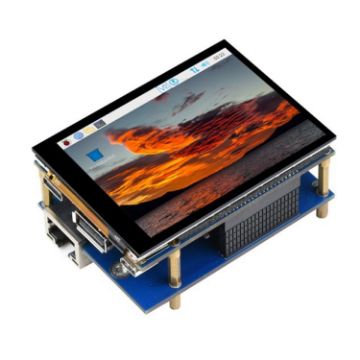
Waveshare 2.8 inch Touch Screen Expansion Fully Laminated Display For Raspberry Pi CM4
- Touch screen expansion board + interface expander: The touch screen expansion board and an additional interface expander, with Gigabit Ethernet port, M.2 slot for connecting communication module or SSD, and more USB ports.
- 2.8 inch display with 5-point capacitive touch control, better touch experience from the fully laminated screen, together with 6H toughened glass panel, more safe to use
- Touch Screen Expansion Board Introduction:
- CM4 socket: Suitable for all variants of Compute Module 4
- USB: USB 2.0 x 1
- Connector: MIPI CSI 22PIN 0.5mm camera connector
- Display: 2.8 inch fully laminated screen, 480 x 640 pixels, 5-point capacitive touch, toughened glass panel
- Video: Micro HDMI x 1, supports 4K 30fps output
C$92.50 C$108.22
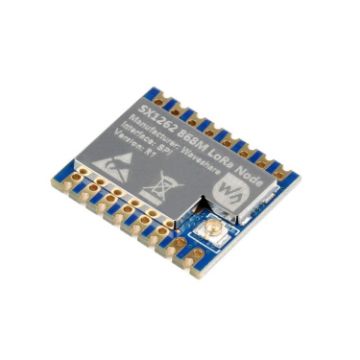
Waveshare Core1262-868M Anti-Interference SX1262 LoRa Module, EU868 Band
- The Core1262-868M is a LoRa core module which incorporates new-generation SX1262 chip. It has featuress including mini size, long range transmission, high anti-interference capability, and so on. The module uses EU868 band, combined with LoRa gateway, it can be connected to servers like TTN server to build LoRa network.
- New-generation SX1262, higher power efficiency and longer transmission distance than the traditional SX1278
- EU868 band, combined with LoRa gateway, quick connection to cloud servers like TTN server
- Comes with rich development resources and manual (examples for STM32, Raspberry Pi Pico)
- RF chip: SX1262
- Frequency range: EU868 (863~870MHz)
- Modulation: LoRa/(G)FSK
- Data rate: 0.018~62.5Kbps (LoRa), 0.6~300Kbps ((G)FSK)
C$18.17 C$21.81
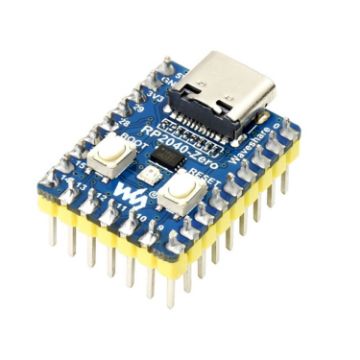
Waveshare RP2040-Zero Pico-like MCU Board Based on Raspberry Pi MCU RP2040, with Pinheader mini Version
- RP2040 microcontroller chip designed by Raspberry Pi in the United Kingdom
- Dual-core Arm Cortex M0+ processor, flexible clock running up to 133 MHz
- 264KB of SRAM, and 2MB of on-board Flash memory
- USB-C connector, keeps it up to date, easier to use
- Castellated module allows soldering direct to carrier boards
- USB 1.1 with device and host support
- Low-power sleep and dormant modes
- Drag-and-drop programming using mass storage over USB
C$15.16 C$18.04
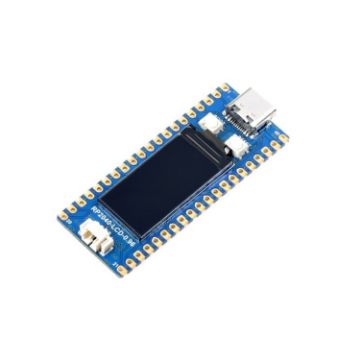
Waveshare RP2040-LCD-0.96 Pico-like MCU Board Based on Raspberry Pi MCU RP2040, with Pinheader
- RP2040-LCD-0.96 is a low-cost, high-performance Pico-like MCU board with flexible digital interfaces. It incorporates Raspberry Pi RP2040 microcontroller chip, as same as on Raspberry Pi Pico. For software development, either Raspberry Pi C/C++ SDK, or the MicroPython is available, which makes it easy for you to get started, and integrate it into end products quickly.
- In additional, there are also onboard 0.96inch IPS display, Lithium battery recharge/discharge header, and high efficiency DC-DC buck-boost chip.
- Key features include:
- RP2040 microcontroller chip designed by Raspberry Pi in the United Kingdom
- Dual-core Arm Cortex M0+ processor, flexible clock running up to 133 MHz
- 264KB of SRAM, and 2MB of on-board Flash memory
- USB-C connector, keeps it up to date, easier to use
- 0.96 inch 160x80 pixels 65K colorful IPS LCD display
C$22.84 C$27.41
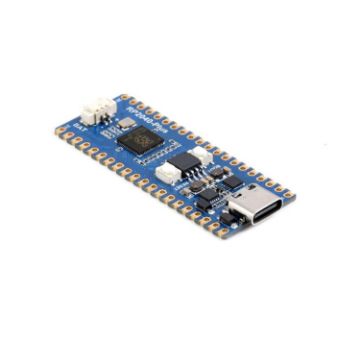
Waveshare RP2040-Plus Pico-like MCU Board Based on Raspberry Pi MCU RP2040, without Pinheader
- Need more Flash for Raspberry Pi Pico? Dislike the outdated Micro USB connector? All these problems are solved by our RP2040-Plus now.
- As same as Raspberry Pi Pico, it incorporates the RP2040 microcontroller, with dual-core Arm Cortex M0+ processor running up to 133 MHz, and 26x multi-function GPIO pins.
- What is different, it features onboard 4MB Flash, USB-C connector, recharge header, and higher current DC-DC chip.
- Key features include:
- RP2040 microcontroller chip designed by Raspberry Pi in the United Kingdom
- Dual-core Arm Cortex M0+ processor, flexible clock running up to 133 MHz
- 264KB of SRAM, and 4MB of on-board Flash memory
- USB-C connector, keeps it up to date, easier to use
C$15.78 C$19.73
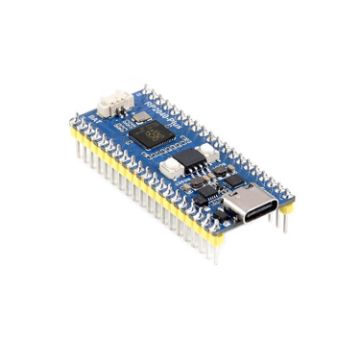
Waveshare RP2040-Plus Pico-like MCU Board Based on Raspberry Pi MCU RP2040, with Pinheader
- Need more Flash for Raspberry Pi Pico? Dislike the outdated Micro USB connector? All these problems are solved by our RP2040-Plus now.
- As same as Raspberry Pi Pico, it incorporates the RP2040 microcontroller, with dual-core Arm Cortex M0+ processor running up to 133 MHz, and 26x multi-function GPIO pins.
- What is different, it features onboard 4MB Flash, USB-C connector, recharge header, and higher current DC-DC chip.
- Key features include:
- RP2040 microcontroller chip designed by Raspberry Pi in the United Kingdom
- Dual-core Arm Cortex M0+ processor, flexible clock running up to 133 MHz
- 264KB of SRAM, and 4MB of on-board Flash memory
- USB-C connector, keeps it up to date, easier to use
C$18.64 C$22.55
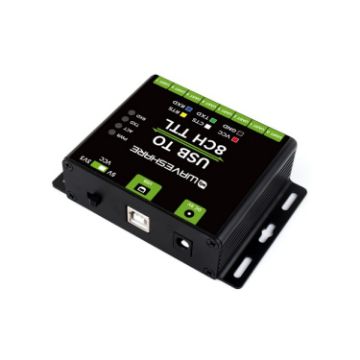
Waveshare 27076 Industrial USB TO TTL UART Serial Communication Module Converter (USB TO 8CH TTL)
- Support USB expansion 8-way TTL (UART) with hardware flow control, can communicate simultaneously and independently
- Onboard self-recovery fuse and protection diode can ensure stable output of current and voltage, prevent overcurrent and overvoltage, and improve impact resistance
- Onboard TVS protection circuit can effectively suppress surge voltage and transient spike voltage in the circuit, lightning protection and anti-static
- Onboard level conversion circuit, surge protection, anti-static, stable and safe communication
- Onboard TTL serial port 3.3V and 5V level conversion circuit, can switch TTL communication level
- Aluminum alloy shell, oxidized frosted treatment, CNC numerical control opening, firm and durable, exquisite workmanship
- External 4 LED indicators, convenient for checking power supply and signal receiving and sending status
- Host interface: USB
C$57.13 C$69.70
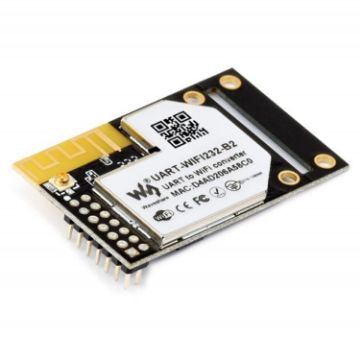
Waveshare 25116 UART to WiFi And Ethernet Module, Integrated 802.11b/g/n Module
- This is an industrial-grade integrated 802.11b/g/n module that can realize two-way transparent transmission of TTL serial port, WiFi, and network port.
- It integrates multiple functions into one, including serial port server, Modbus gateway, MQTT gateway, UART to HTTPD client, etc.
- Traditional serial port devices or MCU control devices can quickly access WiFi wireless networks through this WiFi module.
- Small size and easy to install.
- Suitable for data collection, IoT gateway, security IoT, smart instrument monitoring and other applications
- Power supply: DC 3.3V
- Power supply method: pin header
- Dimensions: 25 x 40 x 8mm
C$28.14 C$34.62
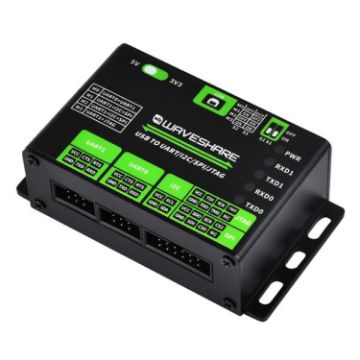
Waveshare 25411 3.3/5V USB To UART/I2C/SPI/JTAG Converter, Supports Multiple Interfaces
- Support USB to 2 UART, or USB to 1 UART+1 I2C+1 SPI, or USB to 1 UART+1 JTAG
- Supports 2-channel high-speed UART interface, baud rate up to 9Mbps, with CTS and RTS hardware automatic flow control
- Supports 1-channel I2C interface, which is convenient for operating EEPROM or programming I2C devices such as OLEDs and sensors through the host computer.
- Supports 1 SPI interface and has 2 chip select signal pins, which can control 2 SPI slave devices at different times.
- Supports 1-way JTAG interface and can be used with OpenOCD for debugging and testing (due to limited chip and software function testing, users need to evaluate and test this function by themselves)
- Onboard 3.3V and 5V level conversion circuit, used to switch the working level of the communication interface, with better compatibility
- Onboard resettable fuse and ESD protection circuit provide over-current/over-voltage protection and ensure safe and stable communication.
- Aluminum alloy shell, oxidized matte surface, CNC process opening, sturdy and durable, excellent workmanship
C$27.18 C$33.16
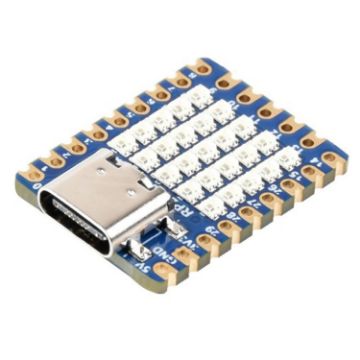
Waveshare 24594 55 RGB LED Matrix RP2040 Dual Core Processor Development Board
- RP2040 microcontroller chip designed by Raspberry Pi in the United Kingdom
- Dual-core Arm Cortex M0+ processor, flexible clock running up to 133 MHz
- 264KB of SRAM, and 2MB of on-board Flash memory
- Onboard 5 5 RGB LED matrix for colorful lighting display
- Castellated module allows soldering direct to carrier boards
- USB 1.1 with device and host support
- Low-power sleep and dormant modes
- Drag-and-drop programming using mass storage over USB
C$17.68 C$21.38
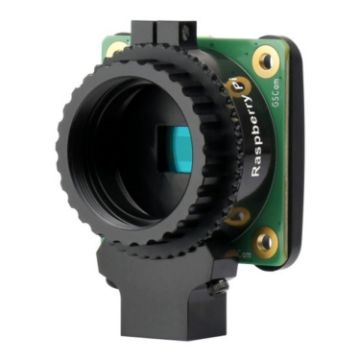
Waveshare Original Raspberry Pi 1.6MP Global Shutter Camera Module (24385)
- Resolution: 1.58 MP (color), 1456 1088
- CMOS diagonal size: 6.3mm
- Pixel size: 3.45m 3.45m
- Output: RAW10
- Adjustable back focus (12.5~22.4mm)
- The lens supports C-mount / CS-mount (including C-CS adapter)
- IR CUT FILTER integration
- Tripod: 1/4-20
C$136.40 C$163.68
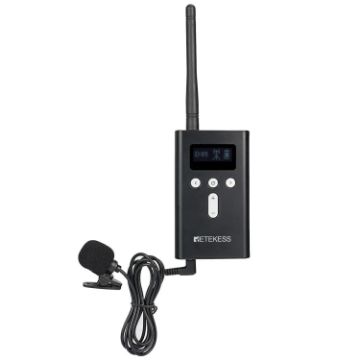
RETEKESS T130S Wireless Guide Transmitter Tourism Conference Explanation
- Note: this is only a wireless transmitter, it must be matched with the receiver to build a wireless tour guide system
- Frequency range: 195-216MHz
- Channels: 49 channels
- Frequency response: 50Hz-18000Hz
- Operating voltage: DC 3.7V
- Transmit output power: 18dBm
- Audio input: 3.5mm line/microphone input
- Signal-to-noise ratio (SNR): 80dB (typical)
C$131.12 C$153.40

NEED HELP?
Payment options
